
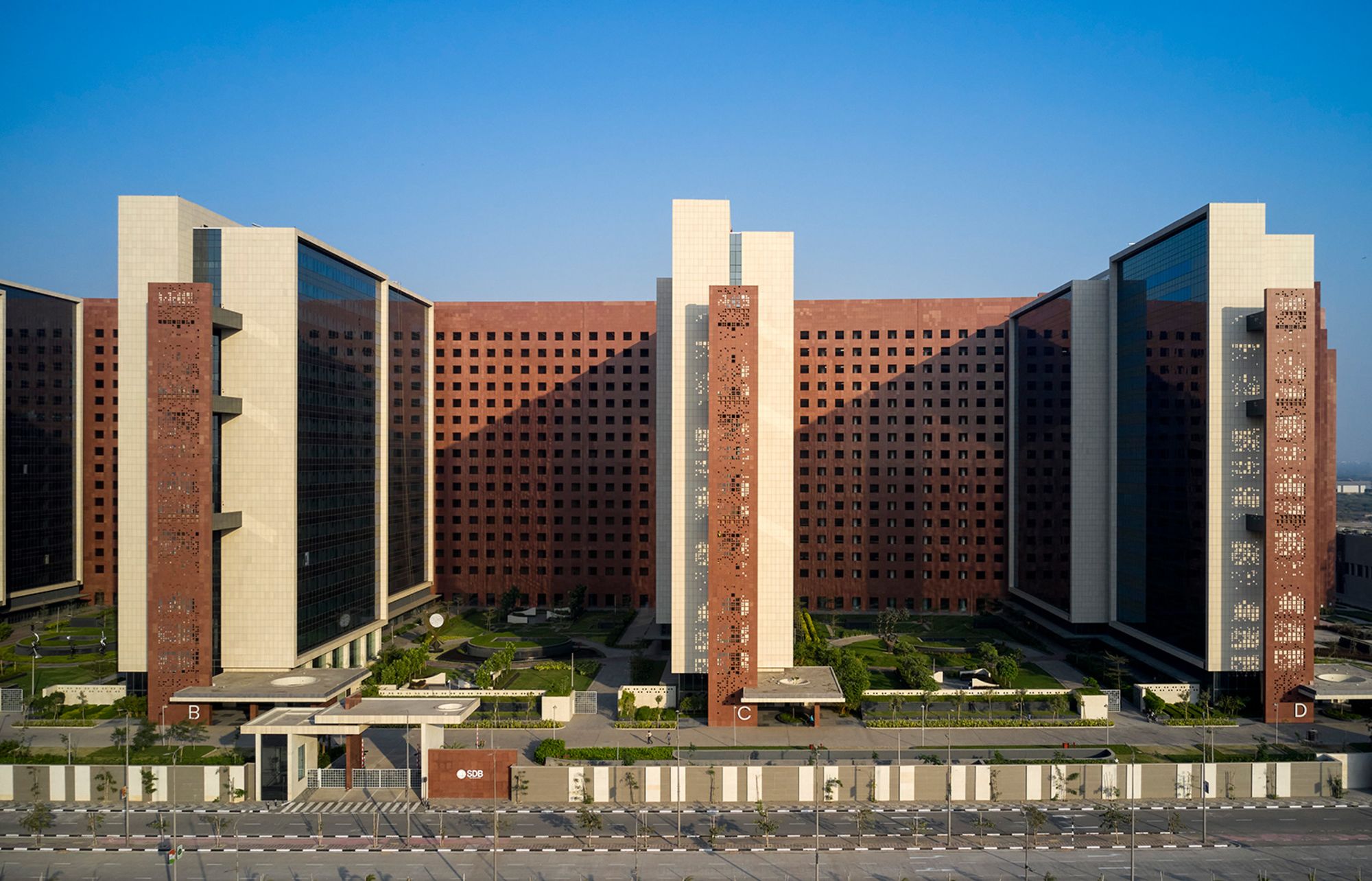
For eight decades, the Pentagon in Arlington, Virginia, held the distinction of being the world’s largest office building, symbolizing both American military power and architectural ambition. That era has now ended: a new office building has officially claimed the title, reshaping global benchmarks for large-scale office design.
The Pentagon: An Architectural Giant
Completed in 1943, the Pentagon was designed to consolidate the U.S. Department of Defense under one roof. Key facts about the Pentagon include:
- Floor area: Approximately 6.5 million square feet
- Employees: Houses over 23,000 military and civilian personnel daily
- Design: Five-sided structure with five concentric rings, facilitating rapid movement and coordination
For 80 years, its sheer scale and strategic design made it an unparalleled symbol of efficiency and authority.
The New Record-Breaking Building
The new titleholder is [New Building Name], located in [City, Country], which now surpasses the Pentagon in total office space. Highlights include:
- Floor area: Exceeding the Pentagon’s 6.5 million square feet
- Sustainable design: Incorporating cutting-edge green technologies and energy-efficient systems
- Mixed-use capabilities: Designed to combine office, recreational, and public spaces
The building’s designers aimed to balance functionality with modern aesthetics, creating a space that is both enormous and environmentally conscious.
Why the Record Matters
While breaking records is symbolic, the achievement reflects broader trends in urban development and corporate architecture:
- Demand for mega-office spaces – Companies and governments are consolidating operations into single, massive structures.
- Innovation in sustainability – Modern mega-buildings prioritize eco-friendly construction and energy management.
- Global architectural competition – Architects are increasingly competing to design record-breaking, iconic structures.
Architectural Features of the New Leader
The new building distinguishes itself with several innovative features:
- Advanced structural engineering enabling unprecedented floor spans
- Smart building technologies for lighting, climate control, and security
- Flexible interior layouts to accommodate a variety of organizational needs
These features highlight the evolution of large-scale office design, emphasizing adaptability, efficiency, and sustainability.
Cultural and Symbolic Significance
Just as the Pentagon symbolized mid-20th century ambition and military might, the new building represents 21st-century innovation and urban development. It reflects a world increasingly focused on sustainability, efficiency, and integrated urban planning.
Conclusion
After 80 years, the Pentagon’s reign as the world’s largest office building has ended. The new record-holder demonstrates how architecture continues to evolve, combining scale, innovation, and sustainability. This transition marks not only a new milestone in building design but also a reflection of modern priorities in corporate and governmental spaces.